
Keyword Research Isn’t Optional — It’s the Foundation of Your Entire YouTube Channel
If you mess this up, your channel collapses before it even begins. Here’s a practical, battle-tested keyword research method for YouTube for beginners:
1. Choose a niche first — only then research keywords
“The smaller the niche, the bigger the chance.”
Pick a niche with low competition but proven viewer demand.
How to do it:
- Search your intended topic on YouTube.
- Identify the top 3 biggest channels doing that topic.
- Analyze their most viewed videos — title, thumbnail, description, tags.

2. Extract seed keywords from thumbnails & titles
Using the seed keyword mindset (crucial in any youtube for beginners roadmap):
Example:
If the thumbnail shows a lion attacking a car, possible seed keywords:
- “lion attacks car”
- “wild animal attack”
- “dangerous safari moments”
Then search those seed keywords → Look at other related high-view videos → Extract secondary keywords from titles/descriptions.
3. Find trending small channels — dig their keywords
“Study the big guys. But copy the small ones.”
How to do it:
- Look for channels with <10k subs but >100k views per video.
- Save standout videos → Extract keywords from their title, description, tags.
Build a table:
| Keyword | View Count | Number of Videos Using It | Which Channel Uses It |

4. Go deeper — Build a keyword set
Once you’ve collected seed keywords, search again on YouTube:
- Look for which ones pull in millions of views.
- Identify low-competition but high-view keywords → These are golden.
Essential for anyone doing youtube for beginners.
5. Optimize Descriptions & Tags
- Use your keyword set naturally in the description (don’t spam).
- Use TubeBuddy or VidIQ to analyze competitors’ tags.
- Pin 1–2 main keywords + 3–5 secondary ones in your tags.

Strategic Mindset:
- Don’t choose keywords you like — choose what the audience needs.
- Don’t go broad. Target 1 niche. Laser-focus on 1 keyword. Dominate.
Summary:
✅ Choose the right keyword = Head in the right direction
❌ Pick the wrong one = No views, no growth, no chance
🔥 Start now. Don’t sit around thinking. Without serious keyword research, don’t ask why you’re stuck at 12 views.
📌 This is vital for any youtube for beginners strategy!

⚠️ 6 CRITICAL MISTAKES to Avoid in Keyword Research (especially for YouTube beginners):
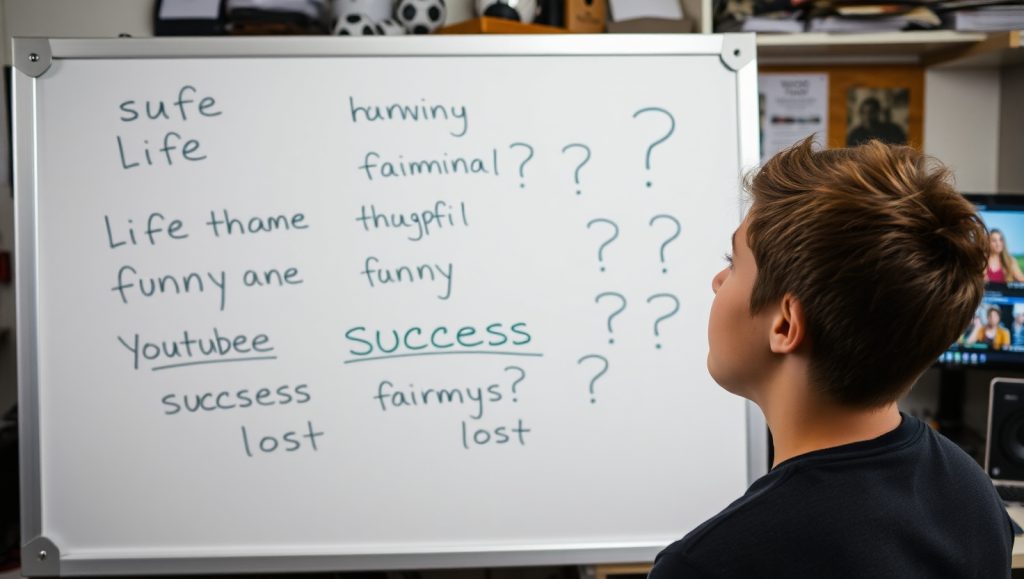
- Avoid vague, general keywords
- ❌ Wrong: “funny”, “life”, “success”
- ✅ Right: “man quits city to live off-grid”, “lion attacks jeep in safari”
The more specific, the more discoverable.
- Don’t blindly chase trends
Trends are powerful, but without depth — you’ll burn out with a few hundred views.
Trend = Lever, not Crutch.
- Don’t overlook small rising channels
Channels under 10k subs with viral videos = goldmines.
Study their titles, thumbnails, and tags to uncover untapped keywords.

- Don’t just see keywords — see context
A keyword in an emotional, intriguing story works 10x better.
Craft your title like a movie trailer, not a robot line.
- Never make up keywords in your head
Real data > personal guesses.
Use YouTube suggestions, autocomplete, TubeBuddy/VidIQ volume metrics. This is critical for youtube for beginners who are still building instincts.

- Don’t switch keywords constantly
“Kill the channel, but never kill the keyword.” – Phúc BANI
Stick to one main keyword across at least 10 videos. Let YouTube know what your channel is about.
Final Words:
Keyword research is make or break. Half-baked = dead series. Solid = explosive recommendations.
🔥 Take action — no more studying.
This is how youtube for beginners win the algorithm war.



Để lại một bình luận