
A powerful keyword set that can build an entire YouTube channel must meet the following criteria:
1. The keyword must allow for the creation of 100+ videos
You can’t build a successful channel with just 1–2 videos. A keyword must be broad enough to generate many video ideas.
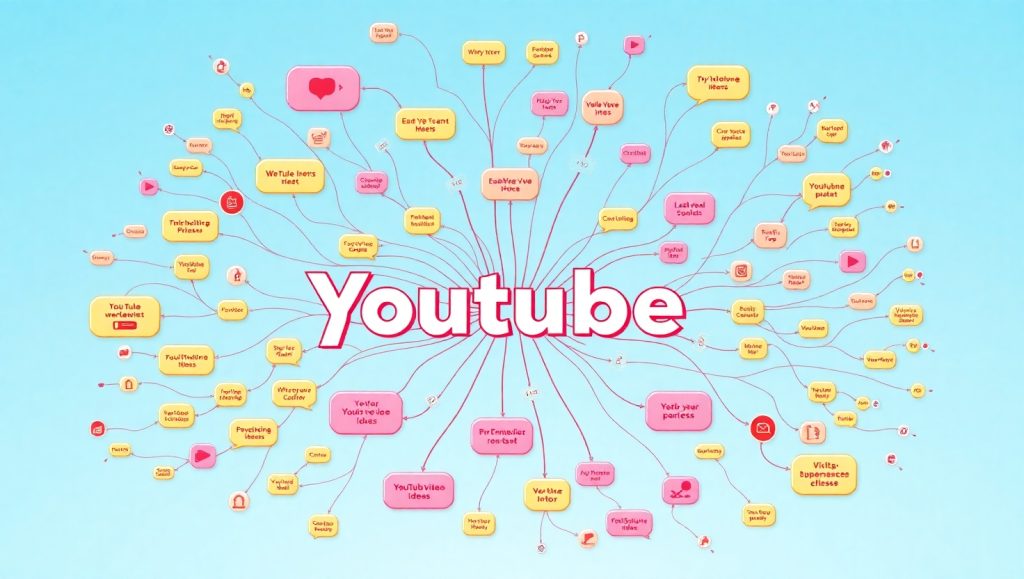
Test method: From one main keyword, you should be able to draft at least 20 potential video titles. Multiply and expand to 80–100 videos to keep consistent uploads.
This is essential for anyone who truly wants to earn money on YouTube sustainably.
2. The keyword must show high viewer demand
You must find existing videos with millions of views under the same topic. This proves the market exists.
Prioritize keywords that are trending or gaining traction recently.
Use thumbnail analysis → describe the image → search for related videos to gauge trend heat.
The keyword must attract real attention — otherwise, your dream to earn money on YouTube will stall early.
3. Small channels (under 10,000 subs) must be succeeding with this keyword
Don’t just copy big channels (they cover multiple topics). Look for small rising channels doing well in this exact keyword.
Phúc BANI calls it: “Study the giants, but copy the underdogs.”
This is how newcomers earn money on YouTube without needing massive resources.

4. The keyword must allow for expansion
You should be able to borrow titles from other niches while still keeping your core keyword.
That means it can cross into other niches, blend with trends, and explode when tested.
A flexible keyword ensures long-term growth — and growth equals more chances to earn money on YouTube.
5. It must align with the emotions and habits of your target viewer
Don’t choose a keyword just because you like it.
It must be what people want to watch, need to watch, crave to watch.
The goal isn’t to please yourself, it’s to serve the viewer — that’s how you earn money on YouTube and grow fast.

6. The keyword must bring “fewer videos, more views, more subs”
Look for channels that post few videos but still get high views and subscriber counts. That’s a golden sign of a strong keyword.
If you want to earn money on YouTube efficiently, this is the kind of keyword you must hunt down.
Final Judgment:
A strong keyword is one that lets you create 100 videos, has a real market, shows success in small channels, can expand easily, and — most importantly — matches real viewer demand.
👉 If your keyword doesn’t meet at least 4 out of these 6 criteria, ditch the keyword, not the channel.
Take action now. Stop hesitating. Test every keyword with this checklist and find the ones that truly let you earn money on YouTube.
Key Reminders:
These are CRUCIAL when selecting a keyword set to build your YouTube channel. One misstep and your whole strategy can derail:
- Do NOT choose keywords based on feelings
Don’t pick based on “I think it’s cool” or “I feel people like it.”
It must be based on real data: real channels, real videos, real views.

- Keyword ≠ Topic
Example: “Wild animals” is a topic. A keyword is “lion attacks car,” “elephant takes revenge,” “python swallows leopard”.
Topics are general. Keywords are what YouTube SEO uses to show your video.
- Test your keyword via search
Type it in YouTube and check:
- Are there multiple million-view videos?
- Are small channels (<10k subs) being recommended?
If not, the keyword is not strong enough to build a channel.

- You need a keyword SET, not just one keyword
A strong set = 5–7 core keywords (each one expandable into many titles).
Keep 1–2 as the backbone of the channel.
- Don’t jump niches blindly
Your first 10 videos should stay within 1 main keyword (or max 2 very closely related ones).
After 10, test expansion by either “keeping the same keyword – new titles” or “keeping same titles – testing new keywords.”

- Avoid keywords that trigger content violations
Blood, horror, excessive sexiness… those keywords might get you demonetized.
They won’t help you earn money on YouTube — they’ll get your channel penalized.
- A dead channel is better than a dead keyword
Remember this mantra: “Abandon the channel, not the keyword.”
If a keyword is strong, a new channel can still win.

- Seeing isn’t knowing. You must DO to find out.
A keyword may seem strong but won’t perform — test again with better thumbnails, titles, descriptions, or durations.
You need 20–30 videos before truly judging if the keyword can support a channel.
In summary:
A keyword is not luck. It’s the result of digging, testing, and verifying with data.
Do it seriously, follow the process — and YouTube will reward you accordingly.
Now stop thinking. Start testing.



Để lại một bình luận